 homyna.com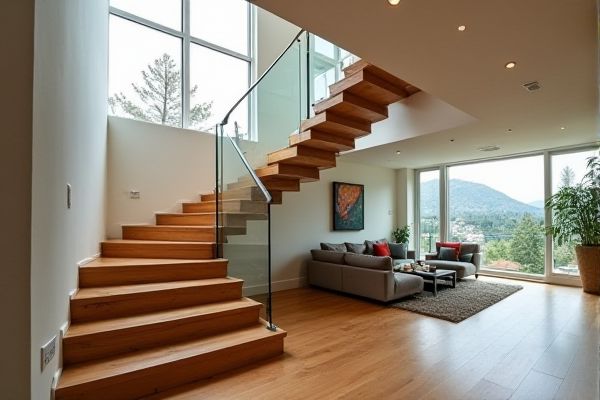
Cantilevered stairs feature treads anchored directly into a wall, creating a floating appearance with no visible supports, while suspended stairs rely on cables or rods from the ceiling or upper structure to hold the treads in place. Understanding these key differences can help you choose the perfect style for your space--explore the rest of the article to learn more about each design's benefits and installation considerations.
Table of Comparison
| Feature | Cantilevered Stairs | Suspended Stairs |
|---|---|---|
| Structure | Steps anchored at one end to a wall or support beam. | Steps hung from ceiling or overhead support using cables or rods. |
| Design Aesthetics | Minimalistic, modern floating appearance. | Lightweight, airy, and visually open design. |
| Installation Complexity | Requires strong wall or support for anchoring. | Needs overhead structural support and precise tensioning. |
| Structural Support | Load borne by wall or beam anchorage. | Load distributed through cables/rods to ceiling or upper structure. |
| Materials Used | Concrete, steel, or wood with metal anchors. | Steel cables, rods, metal fixtures, and wood or glass treads. |
| Space Efficiency | Compact, fits well against walls. | Open space beneath, creating visual spaciousness. |
| Cost | Moderate to high depending on anchoring system. | High due to specialized materials and installation. |
| Safety | Stable if securely anchored but may require railings. | Needs thorough tensioning; may require additional railings. |
| Common Use | Residential and commercial modern interiors. | Architectural showcases, high-end residential, artistic projects. |
Introduction to Cantilevered and Suspended Stairs
Cantilevered stairs feature treads anchored securely at one end into a wall, creating a floating appearance with no visible support beneath. Suspended stairs rely on a system of tensioned cables or rods to hold the steps in place, offering an airy and modern aesthetic. Both designs optimize space and visual lightness, with cantilevered stairs emphasizing wall integration and suspended stairs highlighting structural suspension.
Defining Cantilevered Stairs
Cantilevered stairs are characterized by steps anchored securely at one end to a load-bearing wall, creating a floating appearance without visible supports on the other side, which maximizes open space and enhances modern aesthetics. These stairs rely on robust structural engineering to ensure safety and stability, often using steel or reinforced concrete hidden within the wall for support. You can choose cantilevered stairs to achieve a minimalist, sleek design that emphasizes architectural elegance while maintaining durability.
Defining Suspended Stairs
Suspended stairs are a modern architectural design where each step is anchored directly into a wall or supported by thin cables, creating the illusion that the treads float without visible support. Unlike cantilevered stairs, which extend horizontally from a single fixed point, suspended stairs rely on tension elements to maintain stability. Your choice between these stair types influences both the visual impact and structural dynamics of your space.
Key Structural Differences
Cantilevered stairs feature treads anchored securely at one end into a load-bearing wall, creating a floating appearance without visible supports on the open side, relying heavily on wall strength and embedded steel reinforcements. Suspended stairs use cables, rods, or metal frames hung from the ceiling or upper structures to support the treads, distributing loads through tension elements rather than relying solely on wall anchorage. The primary structural difference lies in cantilevered stairs' reliance on wall support and embedded brackets for stability, while suspended stairs depend on tensile support systems that enable greater design flexibility with minimal visible supports.
Aesthetic Appeal and Design Options
Cantilevered stairs offer a sleek, minimalistic aesthetic with treads appearing to float without visible support, creating an open and modern visual impact ideal for contemporary spaces. Suspended stairs, supported by cables or rods from above, provide a dynamic and airy design that enhances transparency and allows light to flow freely, adding architectural interest. Both designs deliver customization in materials and finishes, enabling tailored aesthetics that complement various interior styles while maximizing spatial perception.
Installation Process and Complexity
Cantilevered stairs require precise anchoring into load-bearing walls, demanding expert structural engineering and longer installation time due to hidden supports. Suspended stairs rely on visible tension rods or cables attached to ceilings or beams, making installation moderately less complex but requiring careful alignment and strong overhead support. Your choice impacts both the structural integrity and visual appeal, with cantilevered designs presenting higher complexity and precision needs during installation.
Safety Considerations
Cantilevered stairs feature treads anchored securely into a wall, providing strong stability but requiring precise engineering to ensure load-bearing safety. Suspended stairs rely on cables or rods, demanding thorough inspection of tension elements to prevent structural failure and guarantee safe use. Evaluating installation quality and material strength is crucial for Your safety when choosing between these modern stair designs.
Cost Comparison
Cantilevered stairs typically incur higher installation costs due to complex engineering and the need for robust wall support, whereas suspended stairs often require specialized hardware, influencing overall expenses. Material choice, design complexity, and labor expertise significantly impact the final price for both stair types. On average, cantilevered stairs range from $3,000 to $15,000, while suspended stairs can vary between $5,000 and $12,000, depending on customization and structural requirements.
Maintenance and Durability
Cantilevered stairs offer easier maintenance due to their minimalistic design and fewer support elements, reducing dust accumulation and cleaning complexity. Suspended stairs, while visually striking, require regular inspection of cable tension and anchoring points to ensure safety and long-term durability. Both types demand high-quality materials like steel or reinforced concrete to maximize lifespan and resistance to wear.
Choosing the Right Staircase for Your Space
Cantilevered stairs create a sleek, modern aesthetic by anchoring each step to a wall, maximizing open space and enhancing light flow. Suspended stairs, supported by cables or rods, offer a floating appearance and flexibility in installation without needing a load-bearing wall. Your choice depends on your space's structural limitations, design preference, and the desired balance between minimalism and architectural statement.