 homyna.com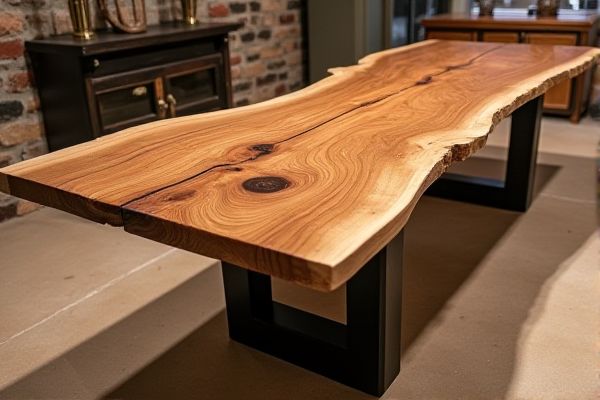
Waterfall edge tables feature wood slabs with edges that smoothly curve downward, creating a continuous flow from the tabletop to the legs, while live edge tables preserve the natural, irregular contours of the wood's outer bark, showcasing its raw, organic shape. Discover how choosing between these distinctive styles can enhance Your space and fit your aesthetic preferences by reading the full article.
Table of Comparison
| Feature | Waterfall Edge Table | Live Edge Table |
|---|---|---|
| Material | Typically engineered wood or plywood with edge details | Natural slab with raw, irregular bark edge |
| Edge Style | Waterfall edge wraps vertically down the sides for smooth, modern look | Preserves the natural shape and texture of the original tree |
| Design Aesthetic | Contemporary, sleek, minimalist | Rustic, organic, unique |
| Fabrication Complexity | Moderate, with precise edge mitering | High, due to natural irregularities and finishing requirements |
| Durability | High, often finished with durable veneers or laminates | Variable, depends on wood species and maintenance |
| Cost | Generally more affordable | Higher, premium due to natural wood and craftsmanship |
| Maintenance | Low, easy to clean and maintain | Moderate, requires care to preserve natural edge |
| Common Use Cases | Modern office desks, kitchen islands, conference tables | Statement furniture pieces, artisanal dining tables, unique countertops |
Introduction to Waterfall Edge and Live Edge Tables
Waterfall Edge tables store data in a distributed file system with transactional support, enabling efficient batch and streaming workloads through versioned snapshots and schema enforcement. Live Edge tables provide low-latency, real-time data access with immediate updates that benefit applications requiring the most current information. Your choice between Waterfall Edge and Live Edge tables depends on whether your workload prioritizes data consistency and historical versions or instant data freshness.
Defining Waterfall Edge Tables
Waterfall Edge Tables in data engineering represent a structured approach where data is ingested, processed, and stored in incremental layers or stages, ensuring reliable and optimized batch processing. Unlike Live Edge Tables that support real-time streaming data for instant analytics and updates, Waterfall Edge Tables focus on sequential updates to maintain data consistency and integrity across large datasets. Managing your data with Waterfall Edge Tables enables efficient historical data tracking and complex transformations, suitable for scenarios requiring periodic but comprehensive data refreshes.
What Is a Live Edge Table?
A Live Edge Table in data management refers to a dynamic data storage system that supports real-time data processing and updates, enabling continuous data ingestion without requiring batch processing. Unlike a Waterfall Edge Table, which manages data flow in discrete stages, a Live Edge Table ensures immediate reflection of changes in your data pipeline, optimizing timeliness and responsiveness for analytics and decision-making. This approach is crucial for applications demanding up-to-date insights, such as streaming data environments and real-time monitoring systems.
Design Aesthetics: Waterfall Edge vs Live Edge
Waterfall edge tables feature a continuous, sleek design where the tabletop material seamlessly flows over the edges, creating a smooth, modern aesthetic that emphasizes clean lines and uniformity. Live edge tables showcase the natural, organic contours of wood, preserving the tree's original shape and adding rustic charm with unique, irregular edges that highlight the wood's texture and character. Your choice between these designs depends on whether you prefer contemporary elegance or raw, natural beauty in your furniture.
Material Choices and Wood Selection
Waterfall edge tables commonly feature hardwoods like walnut, cherry, and maple for their durability and smooth, continuous grain that accentuates the flowing edge design. Live edge tables showcase natural, often irregular wood slabs selected for unique knots, cracks, and organic shapes, emphasizing raw beauty from species such as oak, elm, and reclaimed wood. Material choice in waterfall edges demands uniformity and stability to maintain the seamless flow, while live edge wood selection prioritizes character and natural imperfections.
Durability and Maintenance Comparison
Waterfall edge tables ensure high durability by storing data as immutable files, simplifying recovery and reducing corruption risk, while live edge tables offer real-time updates but can encounter consistency challenges requiring frequent maintenance. You benefit from Waterfall's efficient maintenance through automated data compaction and VACUUM processes, whereas live edge tables often need manual intervention and tuning to handle streaming data's volatility. Durability in Waterfall edge tables is thus optimized for long-term data integrity, contrasting with live edge tables' emphasis on agility and immediate access.
Price Differences: Waterfall Edge vs Live Edge
Waterfall edge tables generally cost less due to simpler manufacturing processes and common materials compared to live edge tables, which use natural, irregular wood slabs requiring more craftsmanship and time. Live edge tables often command premium prices because each piece is unique, highlighting natural wood grains and organic shapes that increase production complexity and material costs. Your budget and desired aesthetic will influence whether the affordable, streamlined look of Waterfall edge or the distinctive, high-end appeal of a live edge table suits you better.
Best Room Settings for Each Table Style
Waterfall edge tables are best suited for rooms with modern, minimalist decor where the clean, sleek lines can be highlighted without overcrowding the space. Live edge tables fit perfectly in rustic or industrial settings, enhancing natural textures and organic aesthetics with ample lighting to emphasize the wood grain and unique live edge contours. Both styles benefit from open layouts, but waterfall edges thrive in spaces with polished surfaces, while live edge tables excel in environments that incorporate natural elements and earthy tones.
Customization Options and Flexibility
Waterfall edge tables offer limited customization options, primarily designed for fixed, predefined data structures, making them less flexible for dynamic or evolving datasets. Live edge tables provide extensive customization capabilities, allowing you to adjust schema, data types, and update frequency in real-time, which enhances adaptability to changing business requirements. Your choice between these depends on the need for static data consistency versus dynamic data manipulation and rapid iteration.
Which Table Edge Is Right for Your Space?
Waterfall edge tables offer a dramatic and seamless flow of material from the tabletop down the sides, creating a bold statement perfect for modern or minimalist interiors. Live edge tables retain the natural, organic shape of the wood, highlighting unique grain patterns and imperfections ideal for rustic or nature-inspired spaces. Your choice depends on whether you prefer a sleek, contemporary look with a waterfall edge or a more authentic, rugged aesthetic with a live edge table.